Return on Equity (ROE)
Return on Equity (ROE) measures a corporation's profitability by revealing how much profit a company generates with the money shareholders have invested.
Formula
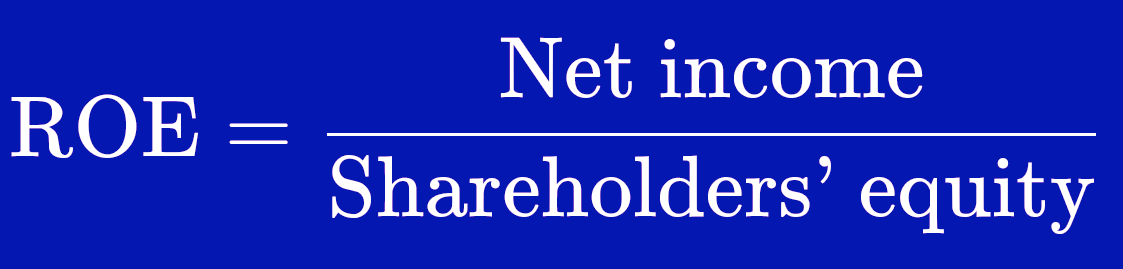
Net Income / Shareholders' Equity
What does it tell you?
ROE is a gauge of a corporation's efficiency at generating profits. It tells you how good the company is at using investment funds to generate earnings growth.
Interpretation
High ROE
A high ROE is generally a good sign, indicating that the company is effectively using shareholders' equity to generate income. An increasing ROE trend is particularly positive.
Low or Negative ROE
A low ROE indicates inefficient use of equity capital. A negative ROE implies the company is operating at a loss. However, new startups might have negative ROE initially.
How to Use It
Tip: Look for companies with an ROE equal to or higher than their industry average.
Consistent, high ROE over several years is a hallmark of a great company (often with a "moat").
Risks
Warning: A very high ROE can sometimes be misleading if the company has a lot of debt (which reduces equity).
High debt increases risk but artificially inflates ROE. Always check the Debt to Equity Ratio alongside ROE.