Quick Ratio (Acid-Test Ratio)
The Quick Ratio is an indicator of a company’s short-term liquidity position. It measures the ability of a company to use its near cash or quick assets to extinguish or retire its current liabilities immediately.
Formula
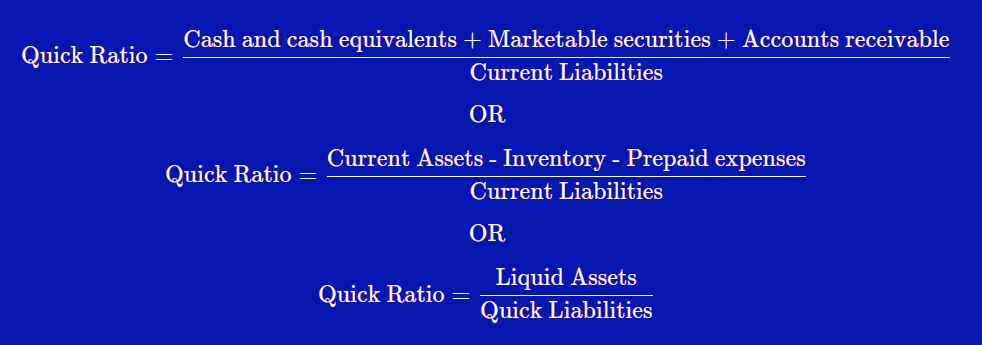
(Current Assets - Inventory - Prepaid expenses) / Current Liabilities
Quick Ratio vs. Current Ratio
The quick ratio is more conservative than the Current Ratio because it excludes inventory and other less liquid current assets. Inventory can sometimes be difficult to turn into cash quickly.
Interpretation
Higher Quick Ratio
A high quick ratio is a good sign, indicating the company has excellent liquidity and financial health. If the ratio is > 1, the company can instantly settle its current liabilities.
Lower Quick Ratio
A low quick ratio (< 1) indicates the company may struggle to pay debts immediately without selling inventory.